Delegate Center
Everything you need to prepare for your SPISMUN adventure.

New to Model United Nations? Begin with the essentials.
Understand how Model United Nations works and your role as a delegate.
READ MORE →
Learn debate procedures, motions and committee expectations.
VIEW GUIDE →
Documents, guidelines and evaluation criteria
Learn how to research, structure, and write your Position Paper.
VIEW GUIDE →
Review the official attire guidelines for conference participants.
VIEW GUIDE →
Learn the standards of behavior and professionalism expected during SPISMUN.
VIEW POLICY →
Understand how delegate preparation, participation, and performance are evaluated.
VIEW CRITERIA →
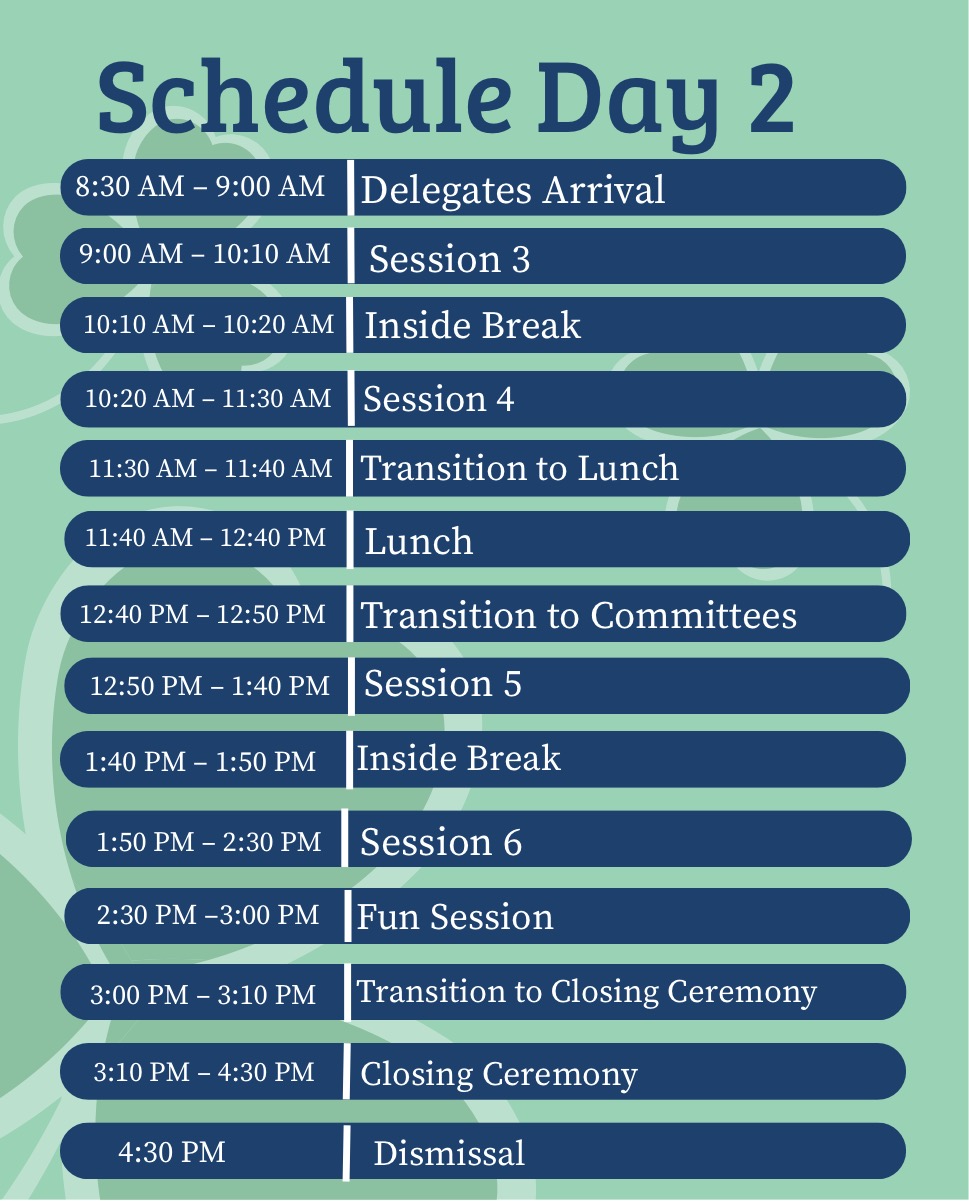
Session times and conference activities.
VIEW SCHEDULE →
Practical advice to make the most of your MUN experience.
READ TIPS →
Introduction to MUN
 Introduction to MUN
Model United Nations (MUN) is an educational simulation in which students take on the role of diplomats representing countries or international organizations. Based on the structure and procedures of the United Nations, MUN conferences allow students to explore global issues, understand different perspectives, and participate in formal debates.
During the conference, students serve as delegates and represent the interests and positions of their assigned countries or organizations. They research international issues, deliver speeches, negotiate with other delegates, and work together to develop resolutions. Each delegate is expected to defend their assigned position respectfully, even when it differs from their personal opinions.
Participating in MUN helps students strengthen their research, public speaking, critical thinking, and negotiation skills. It also encourages them to listen to different viewpoints, build agreements, and understand how international cooperation can help address global challenges.
International Procedure Guide
 International Procedure Guide
The International Procedure establishes how committee debates are conducted, how delegates present proposals, and how resolutions are discussed and voted on.
Delegates should review these procedures before the conference and follow the instructions of their Committee Chairs during each session.
1. Roll Call & Agenda Setting
The Chair confirms attendance, establishes voting rights, and guides the committee in selecting the topic to be discussed first.
2. General Speakers List (GSL)
The General Speakers List is the main forum for formal debate. Delegates take turns presenting their country’s position on the selected topic.
3. Moderated Caucuses
Moderated caucuses allow delegates to discuss specific aspects of the topic in a structured debate. The Chair manages speaking turns and ensures that discussion stays focused.
4. Unmoderated Caucuses
During unmoderated caucuses, delegates may leave their seats to speak directly with others, negotiate, form alliances, and work together on written proposals.
5. Action Phase
Delegates present their Working Papers and Draft Resolutions to the committee. Groups submit their proposals to the Chair, explain their recommendations, and respond to questions.
6. Amendments
Delegates may propose changes, additions, or deletions to a Draft Resolution before the final vote.
7. Voting Bloc
The committee enters the final voting phase. Delegates formally vote on amendments and resolutions according to the committee’s voting procedures.
Throughout the conference, delegates prepare and discuss several types of documents. Each serves a different purpose.
Position Paper
A written statement explaining a country’s position on the committee’s topic.
When: Prepared before the conference.
Procedure: According to the International Procedure Guide, delegates read only the introductory paragraph during the designated presentation.
Working Paper
An informal document containing ideas and proposed solutions developed by delegates working together.
When: After negotiations and the formation of groups or alliances.
Draft Resolution
A formal version of a Working Paper submitted for the committee’s consideration.
When: After a Working Paper has been accepted for consideration.
Procedure: The Chair reviews its format and clauses. Sponsors are required.
Resolution Paper
The final version of a proposal considered and voted on by the committee.
When: After debate and the consideration of amendments.
Procedure: Delegates discuss proposed amendments before voting on the final text.
Once a group of delegates has developed a proposal, the following procedure is used to bring its Working Paper before the committee.
Step 1. Submit the Working Paper
The group submits its completed Working Paper according to the committee’s instructions.
Working Papers are identified by topic and submission order. For example, the second Working Paper submitted under Topic 1 is numbered 1.2.
Step 2. Motion to Consider
After the Working Paper has been submitted, a delegate may propose a motion to consider it.
The Chair puts the motion to a procedural vote.
Step 3. Recognition of Sponsors
If the motion passes, the sponsors are recognized and invited to the podium.
The procedure illustrated in the guide recognizes five sponsors to present the Working Paper.
Step 4. One Speaker in Favor and One Against
One delegate speaks in favor of considering the Working Paper, followed by one delegate speaking against it.
Both speakers explain their positions before the committee proceeds to vote.
Step 5. Procedural Vote
After hearing both speakers, the committee holds a procedural vote to determine whether the Working Paper will be considered.
International Procedure Guide — SPISMUN Cumbres
For the complete reference document, download the official International Procedure Guide.
Position Papers

Once your position paper is complete and meets all the requirements listed below, submit it using our online form.
Submission Deadline: January 22, 2027
A Position Paper is a written document that explains a country’s position on a specific topic and presents possible solutions. It allows delegates to demonstrate their understanding of the issue and prepare for committee debates.
Before writing, delegates should carefully read their committee’s Background Paper and conduct additional research using reliable sources.
Position papers are mandatory for all delegates, except those participating in crisis committees. Delegates who fail to submit their papers by the established deadline will not be eligible for awards.
Position Papers must not exceed two pages and should begin with the following information:
Including the country’s flag in the upper-right corner is optional.
The document must contain the following four sections:
Explain the history and context of the topic. Describe the events that led to the current situation, why the issue matters internationally, and what actions the United Nations has taken to address it.
Identify the main challenges that need to be resolved. Support your explanation with relevant facts, statistics, and examples from reliable sources.
Explain your assigned country’s position on the topic.
Describe how the issue affects your country, the actions its government has taken, and any cooperation with the United Nations or other countries.
Use facts, official statements, and relevant statistics to support your country’s position.
Present realistic solutions that your country would support.
Explain how your proposals could address the problem, who would be involved, and how they could be implemented.
Proposals should reflect your country’s policies, the responsibilities of your committee, and the principles of the United Nations.
Remember that United Nations resolutions do not automatically become national laws.
Include a list of the sources used in your research at the end of your Position Paper.
References must follow either APA or MLA citation format. Make sure the information you present can be traced to reliable sources.
Dress Code
 Dress Code Policy
All SPISMUN delegates are required to wear formal business attire throughout the conference. Clothing should be clean, appropriate, and suitable for a formal academic setting.
The following items are not permitted:
Required Attire:
Delegates may choose the colors of their formal attire.
Not Permitted:
Acceptable Attire:
Not Permitted:
Code of Conduct
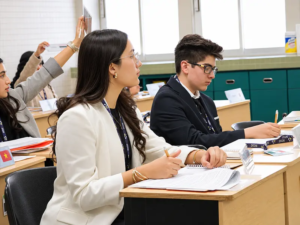 Code of Conduct
The SPISMUN Code of Conduct applies throughout the conference, including committee sessions, ceremonies, breaks, and other conference activities. All participants are expected to maintain a respectful, safe, and professional environment.
Violations of this code may result in verbal or written warnings. Serious or repeated violations may lead to further disciplinary action and affect a delegate’s eligibility for awards.
Faculty advisors are responsible for supervising their students and must remain available throughout the conference.
Award Criteria
 Award Criteria
SPISMUN recognizes delegates who demonstrate strong preparation, active participation, leadership, and diplomatic conduct throughout the conference. Awards are based on each delegate’s performance during committee sessions.
To be considered for an award, delegates must:
Undiplomatic behavior, inappropriate comments, dress code violations, or repeated tardiness may result in a warning. Continued violations may lead to further disciplinary action and affect a delegate’s eligibility for awards.
Delegates are evaluated in four areas:
I. Participation
Delegates are expected to contribute actively and respectfully to committee discussions. This includes speeches, moderated and unmoderated caucuses, working papers, resolutions, and crisis activities when applicable.
Participation is evaluated based on the relevance and quality of each contribution, not simply how often a delegate speaks.
II. Leadership Attributes
Leadership is demonstrated through initiative, cooperation, and the ability to bring delegates together.
Delegates should help build consensus, negotiate agreements, encourage constructive discussion, and work with others to develop solutions. Effective leadership also involves listening to different perspectives and respecting the contributions of fellow delegates.
III. Rhetorical Skills
Delegates should communicate their country’s position clearly, confidently, and persuasively.
Strong rhetorical skills include presenting well-organized arguments, supporting statements with evidence, responding thoughtfully to opposing views, and using diplomatic language throughout the debate.
IV. Knowledge
Delegates must demonstrate a thorough understanding of their assigned country’s policies, the committee’s topic, and the issues under discussion.
They are expected to use reliable sources, present accurate information, and apply their research when developing arguments, negotiating agreements, and proposing realistic solutions.
At the end of the conference, Chairs and Co-Chairs review each delegate’s performance according to these four criteria and their participation records to determine award recipients within each committee.
Conference Schedule

Tips for MUN
 Tips for MUN
Take the opportunity to meet delegates from your committee and other committees. Introduce yourself, exchange ideas, and get to know the Secretariat and conference staff. Building connections is an important part of the MUN experience.
Research your assigned country, its position on the committee’s topic, and possible solutions to the issues being discussed. Consider how your delegation might respond to unexpected developments or crises. Good preparation will help you participate with greater confidence.
Practice expressing your ideas clearly and defending your arguments before the conference. Speaking in front of a mirror or rehearsing with a friend can help you feel more comfortable during debates. Remember to speak at a steady pace and listen carefully to others.
Identify delegations that share similar positions or goals. Discuss possible solutions, negotiate agreements, and work together on proposals that can gain support within the committee. Strong alliances are built through cooperation and compromise.
Pay attention to what other delegates say, even when you disagree with their positions. Taking notes during speeches can help you identify important arguments, prepare questions, and respond more effectively during debates.
You don’t need to have the perfect answer before raising your placard. Start by asking a relevant question or making a brief contribution. Every intervention is an opportunity to gain experience and become more comfortable speaking in public.
Remember that you represent your assigned country or organization, not your personal opinions. Consider its interests, policies, and diplomatic relationships when speaking, negotiating, or proposing solutions.
Debates may take unexpected directions, and other delegates may introduce ideas you hadn’t considered. Stay open to new information, adjust your approach when necessary, and look for opportunities to reach agreements without losing sight of your delegation’s position.